Home » Blog » Artificial Intelligence
The Next Strategic KPI: Sustainable Well-being and Productivity
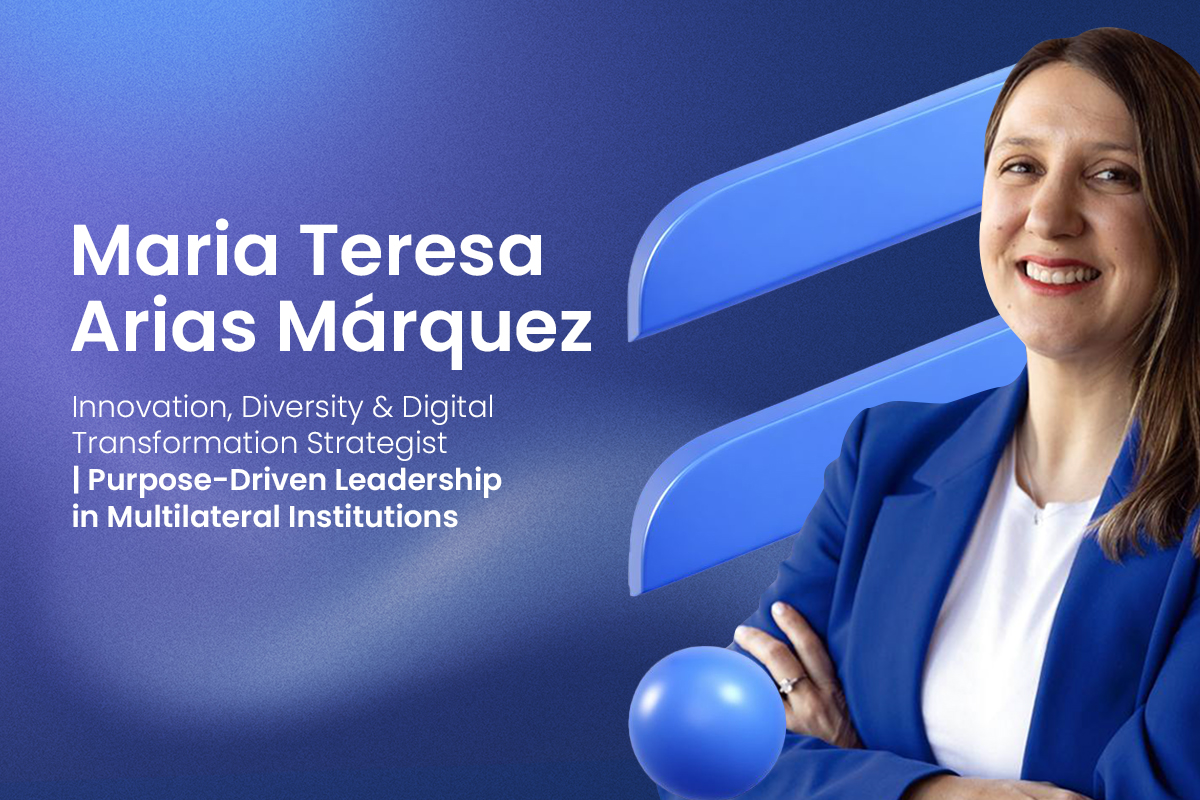
María Teresa Arias Márquez, innovation, diversity and digital transformation strategist, reflects on leadership, AI and wellbeing as keys to sustainable productivity.
Why Choose The Flock?

+15.000 top-tier remote devs
Payroll & Compliance
Backlog Management
For years, we focused on measuring productivity with rather classic indicators: speed, deliveries, and efficiency. However, in the current context where artificial intelligence and hyperconnectivity reign, I understand that it's worth asking some uncomfortable questions.
If teams today can do more in less time, what are we going to do with that capacity? Work better or simply work more?
Many organizations are incorporating technology with an expectation that is almost never spoken aloud: to increase performance without redesigning the human experience of work. This is where we find a huge risk.
It's true that automation can reduce repetitive tasks and speed up processes, which is clear and beneficial. However, the flip side is determining if each efficiency gain automatically turns into more workload, more pressure, and constant availability. In that case, the result is not sustainable innovation. It's burnout.
That's why I believe the next strategic KPI will not just be productivity, but sustainable well-being. And not from a soft perspective, but from a business standpoint. When an organization systematically wears out its teams, it loses not only well-being: it loses focus, creativity, collaboration capacity, and ultimately, competitiveness. Burnout and overload have a real impact on turnover, engagement, decision quality, and adaptability. This is not new and should be part of the conversation.
The paradox is that, often, we seek efficiency by eroding precisely what sustains high performance in the long term.
Adding to this is the fact that today we coexist with multigenerational teams undergoing accelerated technological transformation. Not everyone relates to AI, speed, or change in the same way, and this forces a rethink of leadership, accessibility, and organizational design. Digital transformation should not leave people behind within the organizations themselves. Or we will face deeper problems.
In my view, the most competitive companies in the coming years will not just be those that incorporate more technology. They will be those that manage to build cultures capable of sustaining productivity, learning, and well-being at the same time.
Perhaps the real challenge is no longer how much more we can produce, but how long we can innovate without wearing people out in the process.
Frequently Asked Questions about Sustainable Productivity and Workplace Well-being
1. What is sustainable productivity?
Sustainable productivity is an organization's ability to improve results without causing constant burnout in its teams. It's not just about producing more, but doing so in a way that can be sustained over time, taking care of workplace well-being, motivation, collaboration, and decision quality.
2. Why should workplace well-being be a strategic KPI?
Workplace well-being directly impacts business indicators like turnover, engagement, productivity, creativity, and adaptability. When teams work under constant pressure or overload, performance can be maintained for a while, but it eventually affects work quality and the organization's competitiveness.
3. How does artificial intelligence influence workplace productivity?
Artificial intelligence can increase productivity by automating repetitive tasks, speeding up processes, and freeing up time for higher-value activities. However, if companies use that efficiency only to add more workload, AI can end up amplifying stress and burnout instead of improving the work experience.
4. What is the relationship between productivity, burnout, and digital transformation?
Digital transformation can improve efficiency, but it can also create more pressure if not accompanied by a work redesign. When productivity is measured only by speed or number of deliveries, the risk of burnout increases. Therefore, organizations need to balance technology, well-being, and leadership.
5. How can companies build a culture of sustainable productivity?
Companies can build a culture of sustainable productivity by reviewing workloads, promoting rest spaces, training teams in new technologies, strengthening leadership, and measuring not just results, but also the impact of work on people.
6. Why are multigenerational teams key in this debate?
Multigenerational teams experience technological transformation in different ways. Some people quickly adopt new tools, while others may need more support. For innovation to be sustainable, organizations must ensure that technology is accessible and that no one is left behind in the process.
7. Does sustainable productivity replace traditional productivity indicators?
Not necessarily. Sustainable productivity does not eliminate indicators like efficiency, deliveries, or speed, but complements them. The difference is that it incorporates a long-term perspective: not just how much a team produces, but under what conditions it does so and how long it can sustain that level of performance.
Why Choose The Flock?
+15.000 top-tier remote devs
Payroll & Compliance
Backlog Management