Home » Blog » Software Development
Code is Optimized, People are Supported: How We Unified Two Engineering Cultures Under a Common Vision
An experience on how to integrate development teams, break down internal silos, and accelerate software delivery with Continuous Delivery, leadership, and generative AI.
Why Choose The Flock?

+15.000 top-tier remote devs
Payroll & Compliance
Backlog Management
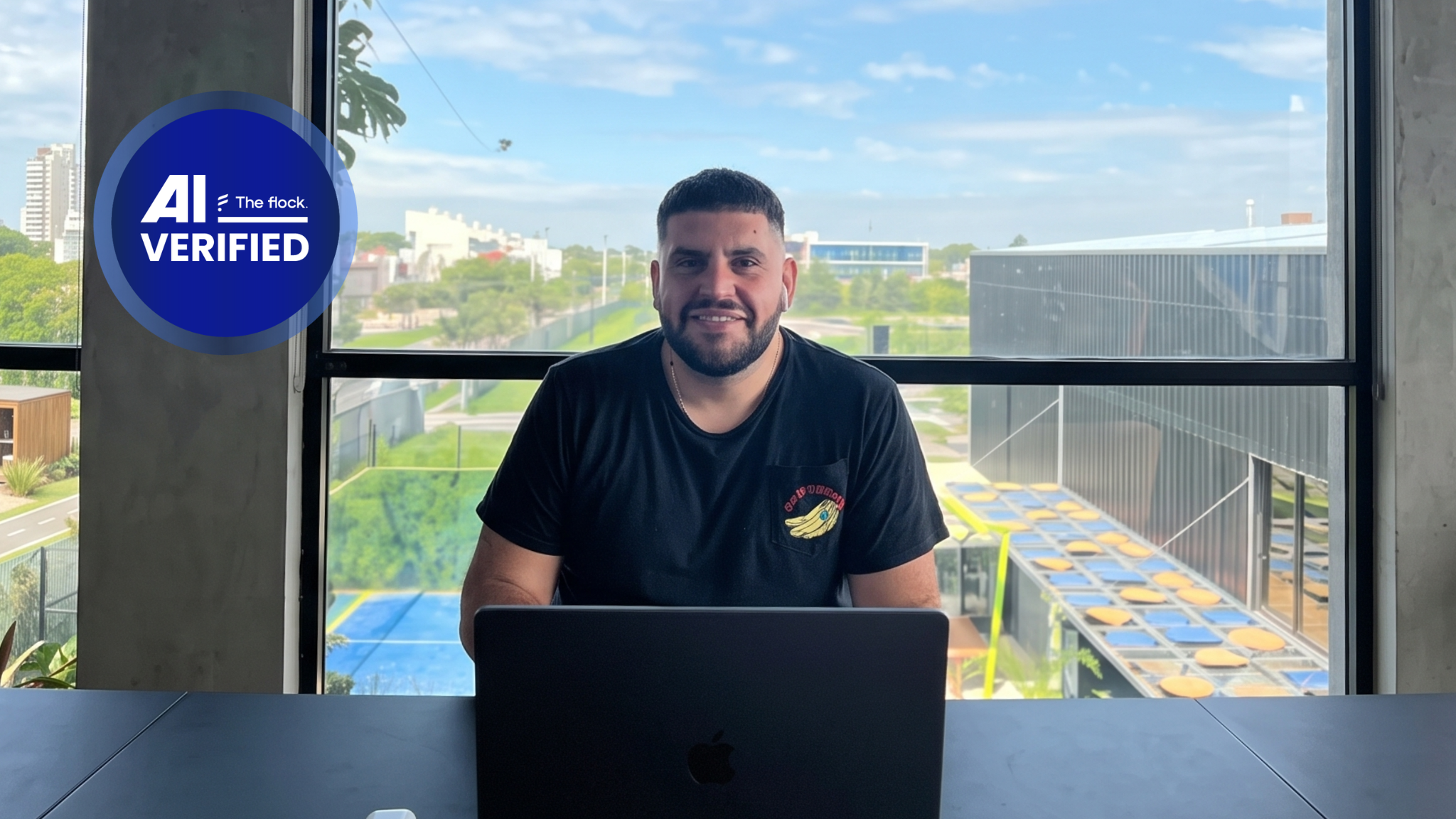
The transformation within engineering teams is rarely paved with purely technical decisions. It is largely influenced by the culture, company structure, and adaptability of the people who make up the system.
From Planning to Continuous Delivery
Upon entering the organization, the landscape was one familiar to companies in the consolidation phase: defined functional silos. On one side, the Product Development team; on the other, the Administration team. Formally, tools were not lacking: there was Scrum, regular ceremonies, documented planning, and impeccable task boards. However, the gap between agile theory and day-to-day effectiveness was evident. We operated under a rhythm filled with delays and bottlenecks; the methodological order had paradoxically become a bureaucracy that hindered deployments. We were slow.
The real issue wasn't methodological, it was a mindset problem. The predictability of rigid planning was detrimental to the business's responsiveness, and in a competitive market, software that isn't deployed doesn't add value. In light of this diagnosis, we made a clear strategic decision: to abandon the goal of "strictly adhering to the plan" and replace it with "delivering consistently and with real impact".
The transition to Continuous Delivery involved restructuring daily dynamics. Massive tasks that stalled for weeks were broken down into minimum viable increments. This required us to redefine everything from how we analyzed requirements to how we tested each delivery. The team's premise became simple: it's preferable to visualize small, quick, and stable changes than to wait for a perfect functionality that risks becoming obsolete before reaching production. The impact was immediate. Stakeholders began to notice a dynamism that didn't exist before, and seeing the software evolve in real-time generated a trust that gave the team a tremendous positive boost. But this new pace also made it clear that we needed better synchronization with the Administration team, which opened the door for the next step.
Integrating Teams Under a Unified Goal
In this context, the organization made a structural decision: to integrate both teams into a single structure under my role as Team Lead. It wasn't just a change in the organizational chart, but a quest for greater operational synergy. Unifying two groups with different dynamics, workflows, and customs was a complex challenge. In practice, the Product team acted as an engine: already accustomed to continuous delivery, they naturally helped spread this way of working to colleagues from Administration. To consolidate the merger, we designed mixed work cells where developers from both backgrounds collaborated on the same technical objectives. This helped share knowledge end-to-end, eliminated single points of failure, and improved the company's operational effectiveness.
Leading Transformation with Empathy
However, the most critical part of this process wasn't technical. Deep changes in organizations aren't executed by decree: they are processed through people. And as leaders, we must have the honesty to recognize this. The initial resistance was a natural reaction: developers from Administration encountered a different workflow, much more demanding, and a drastic change in their usual routines. In response, the strategy wasn't imposition, but active empathy. We opened direct communication channels to listen to frustrations, understand fears about the new pace, and support the transition with real technical assistance. The team's response was excellent. The initial uncertainty transformed into a shared commitment; understanding that small, frequent deliveries also reduced stress and pressure from massive deployments, the team not only adapted but became much more united.
AI to Accelerate Technical Learning
Simultaneously, the methodological transformation coincided with the maturation of Generative Artificial Intelligence tools applied to development. Far from viewing them with skepticism, we adopted them as strategic allies. The biggest challenge in merging the teams was the disparity in code knowledge, and AI radically closed that gap: it allowed the team to audit complex architectures, understand legacy code, streamline test design, and generate technical documentation instantly and autonomously. An induction process that historically took weeks was reduced to days. Moreover, integrating code assistants into the daily workflow automated repetitive tasks and assisted in error resolution, acting as a technical equalizer that allowed us to maintain pace without compromising quality.
From Internal Change to Client Deployment
Today we operate with solid methodological maturity. The hybridization of developers in projects is the norm, and that level of effectiveness led us to a crucial stage: face-to-face work with the client for final deployment. This phase has its tensions: introducing software developed under a high-speed culture often means clashing with the client's more traditional structures. But the team is facing it firmly, defending the robustness of the developments, negotiating with technical criteria, and demonstrating with data that our continuous delivery model drastically reduces production deployment risks.
Lessons for a Stronger Engineering Culture
Looking back, this journey leaves us with very clear lessons. The first is that agility is purely cultural, not procedural; impeccable boards or scheduled meetings are useless if there isn't a real and collective commitment to constant delivery. We also understood that organizational silos are the worst enemies of efficiency, as they feed misalignment and knowledge asymmetries, problems that are only resolved when we bet on hybrid structures and unified objectives. Above all, we confirmed that the human factor demands empathetic leadership, because no technical transformation is viable over time if we ignore its emotional impact on people. When we achieve that, technology ceases to be just a tool and becomes that key equalizer that bridges gaps and accelerates the learning of the entire group.
None of this would have been possible without the people who sustain this process day by day. I want to deeply thank the developers, who put their body and mind into every technical change; the functional analysts, for being the key bridge that gives us clarity; the QA team, who ensure quality at every step we take, our CTO and CEO, for giving us the support, space, and trust to lead this transformation. Lastly, I want to thank Germán (functional area leader) and Damián (QA leader): their dedication, commitment, and approach to daily work are a driving force that inspires the rest of the team to constantly surpass themselves.
Excellent software is the direct result of a healthy, unified team convinced of its processes. With the group we have consolidated today, we are more than ready for the next challenge.
Why Choose The Flock?
+15.000 top-tier remote devs
Payroll & Compliance
Backlog Management